
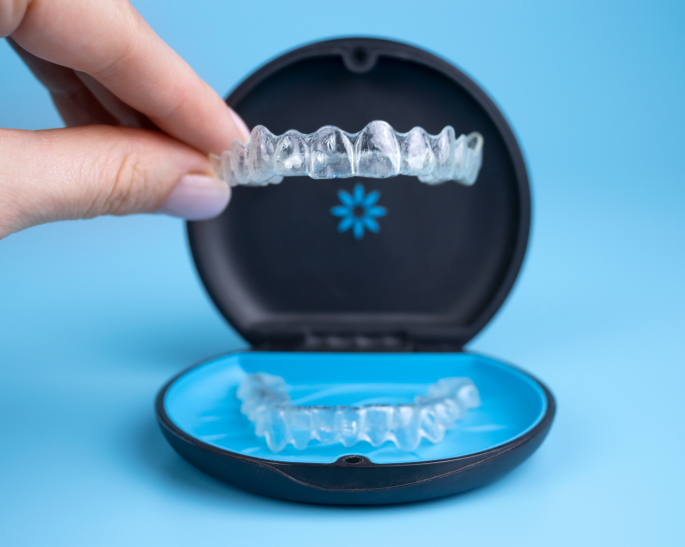
When most people think about Invisalign, they picture a straighter smile. While the clear aligners are excellent for correcting crooked or crowded teeth, they can also address many common bite problems. In fact, improving your bite is often just as important as enhancing your smile’s appearance. A properly aligned bite can make chewing more comfortable, reduce uneven wear on your teeth, and even improve your overall oral health.
So, can Invisalign fix bite problems? In many cases, yes! Here’s a closer look at the types of bite issues Invisalign can treat and how the process works.
What Is a Bite Problem?
Your bite refers to how your upper and lower teeth fit together when your mouth is closed. Ideally, they should align comfortably and evenly. When they don’t, it’s called a malocclusion, or bite misalignment.
Some of the most common bite problems include:
- Overbite: The upper front teeth overlap the lower teeth more than normal.
- Underbite: The lower teeth extend in front of the upper teeth.
- Crossbite: Some upper teeth sit behind the lower teeth instead of in front.
- Open bite: The upper and lower front teeth don’t touch when the mouth is closed.
- Crowding or spacing issues: Although not technically bite problems on their own, they can affect how your teeth come together.
The severity of these issues varies, which influences the best treatment approach.
How Invisalign Corrects Bite Misalignment
Invisalign uses a series of custom-made, clear plastic aligners that gradually move your teeth into healthier positions. Each set of aligners is worn for about one to two weeks before switching to the next in the series, allowing for controlled, gentle tooth movement.
To help achieve more complex movements, your orthodontist may place small, tooth-colored attachments on certain teeth or use elastics alongside the aligners. These additional tools allow Invisalign to correct not only the position of individual teeth but also how your upper and lower jaws work together during treatment.
Because treatment is carefully planned using advanced digital imaging, every tooth movement is mapped out before you even begin wearing your first aligner.
Which Bite Problems Can Invisalign Treat?
Invisalign has become increasingly effective at treating mild to moderate bite issues. Many patients with overbites, underbites, crossbites, and open bites can achieve excellent results without traditional braces.
However, the success of treatment depends on several factors, including:
- The severity of the bite problem
- Your age and jaw development
- Whether the issue involves primarily the teeth or the jaw itself
- Your commitment to wearing the aligners for 20 to 22 hours each day
More severe jaw discrepancies or complex orthodontic cases may still require braces or other orthodontic treatments. An orthodontic evaluation is the best way to determine whether Invisalign is the right solution for your specific needs.
The Benefits Go Beyond a Straighter Smile
Correcting a bite problem isn’t just about aesthetics. A healthier bite can make everyday activities like chewing and speaking more comfortable while reducing unnecessary stress on your teeth and jaw. It may also lower the risk of uneven tooth wear, chipped teeth, and certain jaw joint problems over time.
If you’ve been told you have a bite issue, don’t assume traditional braces are your only option. Invisalign has helped countless patients achieve healthier, more balanced smiles with a treatment that’s both discreet and convenient.
A consultation with an orthodontist can help you discover whether Invisalign is the right path to improving both your smile and your bite.
About the Practice
At Serenity Orthodontics, the experienced orthodontic team is dedicated to helping patients achieve healthy, confident smiles through personalized treatment plans. They offer Invisalign for teens and adults, using advanced technology to address a variety of orthodontic concerns, including many common bite problems.
Call us at (678) 879-3006 or schedule your appointment online.
